
இருப்பிடம்
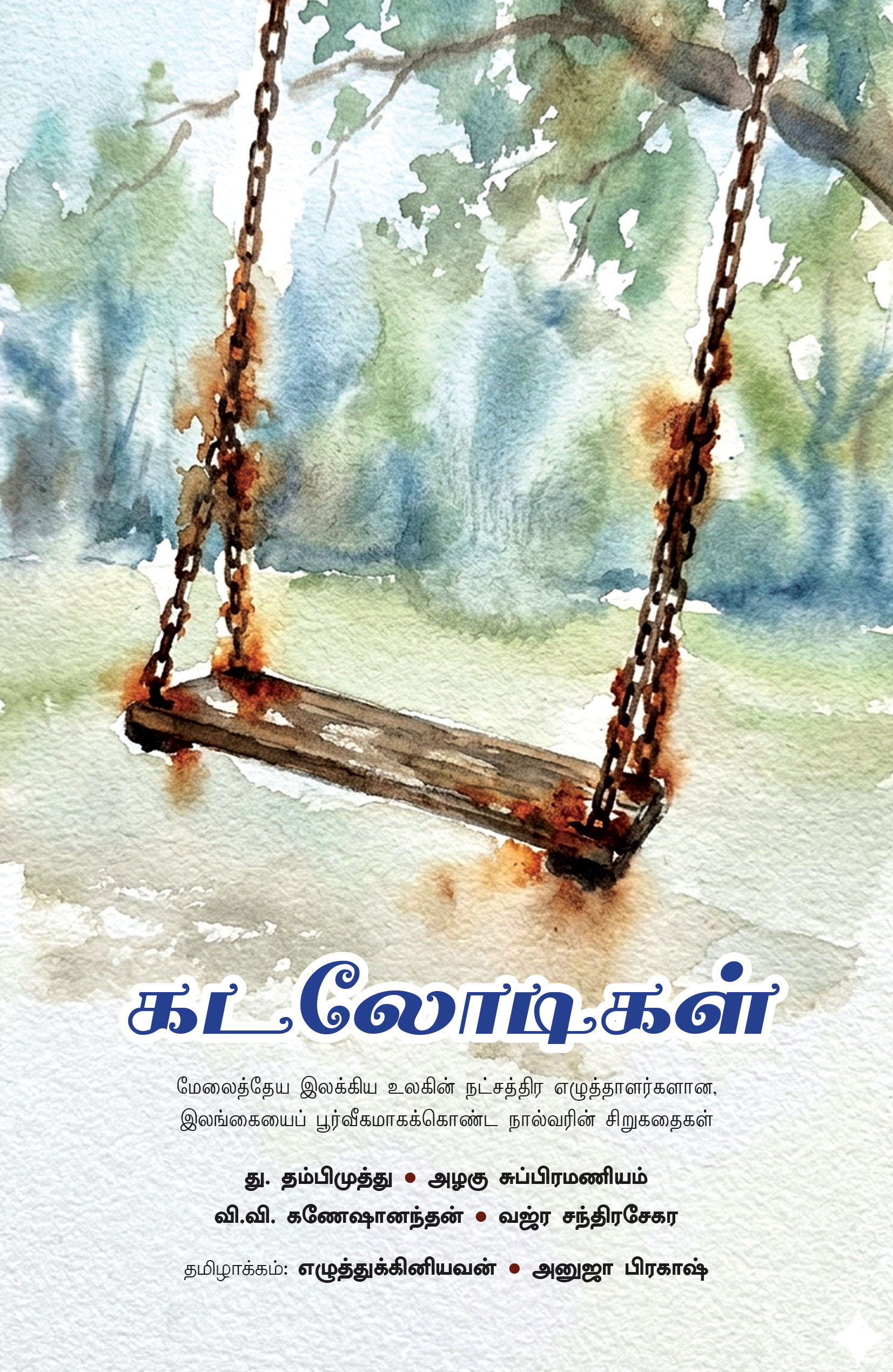
Translated from the original Tamil short story iruppiṭam (இருப்பிடம்) from the 1964 collection of short stories titled akkā (அக்கா) by A. Muttulingam. The original collection is available at noolaham.org. If you have any questions or feedback, please contact ez.iniyavan@gmail.com.
This Facebook post provides some context behind these translations.

“olaiyai vettuvathum kaththithānā! intha [Is it the knife that cuts the leaf! Does this]
overseer solluvathum puththithānā? [overseer speak words of wisdom?]
kaththarikkāy vettuvathum kaththithānā! inthak [Is it the knife that cuts the eggplant? Does this]
kangāniyār solluvathum puththithānā? [foreman speak words of wisdom?]
pudalangāy vettuvathum kaththithānā?” [Is it the knife that cuts the snake gourd?]
“Vayiravanatha… … … Vayirava natha… … … get down dear”
“olaiyai vettuvathum kaththithānā?”
“Listen to me child… … get down … mmm … aaah”
She kept shouting. The rice and gravy that she had been mixing on the plate stayed put.
Whether he was conscious of eating or not, he seemed to ignore his mother.
He was standing on top of the mortar. Holding a large handle-less sickle in his hand, he was swaying back and forth to the beat of his song.
Occasionally when the mortar wobbled, she was startled, afraid that he might topple over; but he kept on singing nonchalantly.
Whenever he felt like eating, he bent down and opened his mouth.
She was then supposed to feed him a ball of rice.
He would then resume his singing.
“olaiyai vettuvathum kaththithānā! intha
overseer solluvathum puththithānā?”
Every day this ritual would last for at least three hours. But the mother never seemed to grow tired of it.
Unlike the others, the mother couldn’t accept him as a complete retard. She was her only son; darling son; a dear son without even a blemish in his intellect.
But he did not appear to have developed the intellect to comprehend the differences among his mother, his house, and the world. He trusted that when he was hungry, his mother would feed him. He thought about nothing beyond this. He had neither need nor compulsion to think beyond that simple want.
He had the physique of a seventeen or eighteen year old, with an unsightly protrusion for a belly; but his hairless face was that of a ten year old.
When he was still at school, she took him to school every morning. Then she waited the whole day until three in the afternoon, when the school ended, to take him home, carefully covering his head with the free end of her sāri.
But his education only lasted from kindergarten to fourth grade.
His brain developed to the point where he could look at a picture and call out “R-O-O-S-T-E-R — Chicken!”. One day he said
“kandhaiya vāththiyār [Kandhaiya teacher]
kindhaiyā vāththiyār [Kindhaiya teacher]
kaḷḷukku mēḷē [on top of a rock]
kundhaiya vāththiyār.” [squat yourself down, Teacher.]
and ran away from the school.
With that perhaps Sellamma, too, was content with the completion of her son’s schooling.
2
It was around one in the afternoon. I was going home for lunch.
“Here, ammā… …”
“edi Sellamma… … come over here; Can’t you see that the teacher is passing by… … … tie my vēṭṭi will you?”
It was only then I noticed him. Fresh from a shower, he stood tall.
His mother must have gone inside to fetch a vēṭṭi.
“Teacher! Did the bell for the bread-break already ring… …?”
I nodded in agreement.
His mind didn’t mature like his body did. Still, he had the sense to realize that he should not stand naked before the teacher.
Does he not have the ability to do anything on his own? My mind was struggling hard to separate the soul of Sellamma that was intertwined with the body of Vayiravanathan.
“edi… Sellamma… you devil, bring the vēṭṭi… Teacher is looking….”
I walked on slowly. I couldn’t dismiss him as a crazy person. I have seen with my own eyes when he acted with a rare sagacity that would astonish anyone. I also sensed a strange rare magnetism tinged with fear that held one back from scolding him.
Nevertheless I felt that some deep flaw trumped everything else.
3
Whenever a temple festival came along, his excitement knew no bounds. On New Year’s Day, goddess ammaṉ will leave on a procession as is customary.
She would sit majestically on the red wooden horse perched on a wheeled cart, as the procession proceeded along the rough Nanthavil lane.
That was a sight to behold!
By the time the deity returned to the temple, it would be two or three in the morning.
He would sit nonchalantly in a corner on the cart, feet dangling, holding up an oil torch.
One can envision the scene: an old silk vēṭṭi wrapped around his hip, held tightly in place by a red piece of cloth, his bare body generously dabbed with sandalwood paste, and his mouth frequently barking out commands.
As the cart stumbled over potholes, causing alarm among onlookers who feared that he might topple over, he would casually use his hip cloth to wipe the oil dripping down to his elbow, and order people around without a care in the world: “Ah… Rathinannai… … pour me some more oil.”
He would await the dawn with a frightening display of patience without catching even a wink.
When one saw him in this situation, one wondered if he didn’t even have the awareness to be scared.
Not just temple festivals, he would show up uninvited to any wedding or funeral, too.
Someone would say “Vayiravanatha… arrange these betel leaves on the platter”. Without fatigue or displeasure, he would sit cross-legged and patiently arrange thousands of betel leaves on platters. It would never occur to him to display any sign of discontent.
I would regard him in awe.
4
They had closed the school after midday for the chariot festival at the Manjavanappathi temple. People thronged from near and far to see the giant chariot that was the pride of Kokuvil.
It was scorching, around two in the afternoon. As usual, the chariot had come to a halt amidst the multitudes of people, in the corner of the northern path around the temple.
I straightened my back to regard the chariot.It stood tall, like a giant motionless mountain, among the suffocating flood of tiny people. It had arrived there at ten in the morning but thereafter had refused to budge even an inch. The more people tried to pull the rope to cajole it to move, the more its wheels sank into the ground.
People milled around about the chariot.
No one had any strength left in their bodies nor in their hearts.
Everyone was fasting for the festival, so hunger was gnawing at them.
“Arōkarā!”
“To Manjavanappathi Murukan!”
“Arōkarā!”
As the countless people cheered on, the chariot would tantalize by appearing to budge a tiny bit, its brass bells jingling. It felt as if Murukan was laughing aloud at us …
But the chariot did not budge.
All efforts were futile.
People started to whisper, “did someone commit some grave sin to anger God?”
Others pleaded at Murukan’s feat, calling out his name.
Only then did I notice him. Amidst the thousands of jaded, exhausted people he stood apart, radiating a rare enthusiasm without any sign of tiredness.
That same old vēṭṭi, and the red cloth tied around it, and a chest daubed with sandalwood paste.
“Arōkarā…. Mmm… To Manjavanappathi Murukan..”
“Arōkarā”
“Mmmm… Kandhaiya aṇṇai… give me a hand … Arōkarā.”
He was pacing up and down, cheering people on. When everyone else was downcast, having lost all hope, he was still smiling.
Is he not tired? Does he not comprehend that a difficult job is indeed difficult?
The sun had started its descent. Whatever little hope that remained had started to fade.
One by one, people dropped the chariot rope and sat on their haunches.
No one had any ideas on how to remedy the situation. The chariot needs to reach its hangar.
Someone would touch the chariot rope, only to drop it the next moment, and go back to squatting.
Old Kathirkāmathāchchi who was carrying a pot of burning camphor, went into a trance and squealed, “Murukan demands a sacrifice, Murukan demands a sacrifice.”
I glanced down. There were already three pumpkins smeared with vermilion powder and cut in half.
“Perhaps if someone fetches a tractor from Iṇuvil … … we can haul the chariot …”
“What!”
The very thought struck everyone as disgusting and disgraceful.
How could one even contemplate getting a tractor to drag Murukan’s chariot, which ought to be dragged by an outpouring of devotion?
“Kandhaiya aṇṇai you take the wheel chock away, let’s give it one more try”
“You madman… stand aside”
Kandhaiya aṇṇai felt a surge of anger.
“Are you trying to school me?”
I examined Vayiravanathan’s face closely. There was no sign of hatred whatsoever. It was as if he didn’t even hear Kandhaiya aṇṇai’s harsh words.
He stood there wearing the same enthusiasm and smile.
People jostled to get a handhold on the chariot rope.
“Arōkarā”
“Teacher… … mmm… … give us a hand-”
It was said with a charm that precluded any possibility of disagreement. I wrapped my sālvai around my waist and obeyed him.
“Arōkarā”
Eyes closed on their own. All of us focussed our hearts and expended every last ounce of energy to pull the chariot.
“To Murukan”
“Arōkarā”
“To Manjavanappathi Murukan”
“Arōkarā”
The chariot relented and sped forward with a sudden enthusiasm. At that moment, no one knew where we were heading.
Suddenly, something happened …
Everyone dropped the chariot rope and sprinted in the opposite direction.
I did, too.
In the hot sand, he lay on his stomach in a pool of blood, bleeding from his mouth and nose. His right hand tightly clutched the sand.
When I crawled into the melee and looked over the heads of people with great difficulty, his left leg and arm were palpitating.
Thereafter he lay motionless.
4
I walk with my eyes fixated firmly on the tarred road surface.
People bustle this way and that.
“It seems the chariot has reached its hangar”
My head, on its own, nods in agreement!
– Everything that begins a journey must reach its hangar, after all.
– But is reaching the hangar the important thing? How one reaches the destination is indeed important, is it not?
Kathirkamathāchchi’s deranged look flashes on my mind’s eye.
My mind weighs heavily.
– Teacher, why do you stand there staring. Give us a hand.
He stands there smiling. On his face, that same charm blended with fear. A charm that makes it impossible to decline the request.
“Teacher, who is it that died?”
I open my mouth to reply.
But my words stay pent up within my chest.
Someone behind me responds.
“It was some mad boy.”
I kept walking, lifting my vēṭṭi slightly to avoid tripping over it.
The gravel beneath my bare feet rekindles my pain.
The transliteration uses the ISO15919 notation https://en.wikipedia.org/wiki/ISO_15919.
Glossary
ammā Mother.
edi (eṭi) A familiar (somewhat disrespectful) exclamation used to call the attention of a female.
vēṭṭi The traditional lower body garment worn by Tamil males around the waist.
aṇṇai A respectful way to address an older male. Literally “elder brother.”
arōkarā A chant used by Tamil Hindus in praise of God.
Transliteration guide for proper names
Places
Manjavanappathi mañcavaṉappati
Nanthavil nantāvil
People
Vayiravanathan vayiravanātān
Sellamma cellammā
Kathirkamathāchchi katirkāmattācci
Kandhaiya kantaiyā
Rathinannai rattiṉaṇṇai
Murukan murukaṉ
The nonsense poems
olaiyai vettuvathum kaththithānā! intha (ōlaiyai veṭṭuvatum kaṭṭitāṉā! inta)
overseer solluvathum puththithānā? (ovarsir coḷḷuvatum puttitāṉā?)
kaththarikkāy vettuvathum kaththithānā? inthak (kattarikkāy veṭṭuvatum kaṭṭitāṉā? intak)
kangāniyār solluvathum puththithānā? (kaṅkāṇiyār colluvatum puttitāṉā?)
pudalangay vettuvathum kaththithānā? (putaḷaṅkāy veṭṭuvatum kaṭṭitāṉā?)
kandhaiya vāththiyār (kantaiyā vāttiyār)
kindhaiyā vāththiyār (kintaiyā vāttiyār)
kaḷḷukku mēḷē (kaḷḷukku mēḷē)
kundhaiya vāththiyār (kuntaiyā vāttiyār)

Leave a Reply